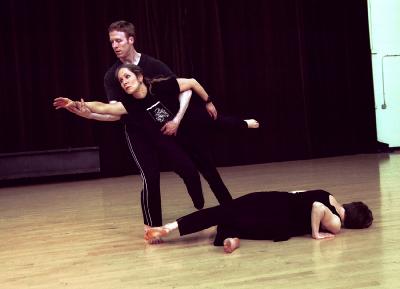
When classes resume after spring break, a group of faculty and students from drama and dance will be presenting the culmination of a project they鈥檝e been working on since fall. Myra鈥檚 War, a movement suite featuring 10 actor/dancers, is slated for April 3鈥�6 in Meany Studio Theatre.
Inspired by the work of Myra Hess, a pianist who organized midday concerts for beleaguered Londoners during the World War II blitz, the project also included lectures during fall quarter and a series of concerts in winter on the theme of artists in a time of crisis.
The movement suite, according to drama professor and director Steve Pearson, is a unique combination of spoken word, movement and music that depicts the blitz in both a concrete and an abstract way. 鈥淚t鈥檚 difficult to describe but I hope it will be easy to watch,鈥� he says.
The piece is analogous to a musical suite in being divided into sections, each with its own material. In this case there are eight sections, representing the eight phases of a bomb鈥檚 explosion: silence, light, sound, concussion, vacuum, wind, debris and more silence.
鈥淲e鈥檙e using the blitz as material for some thoughts about what it means when one says 鈥榙rop a bomb,鈥� 鈥� Pearson says. 鈥淚n one of the fall lectures a Japanese woman was quoted. She said 鈥楴umber the dead one by one.鈥� That鈥檚 what we鈥檙e exploring 鈥� what actually happens to people.鈥�
Faculty members Robyn Hunt of drama and Peter Kyle of dance portray a brother and sister, with Maria Simpson of dance as Kyle鈥檚 romantic partner. Moving through the piece with them is a kind of chorus who take on many roles.
The text comes from a variety of sources. Simpson, for example, speaks the words of an ambulance navigator who described one night of driving through London picking up casualties. Kyle will have a solo in which he speaks the words of a BBC employee who was within 20 yards of a mine explosion. And Hunt will speak the wartime remembrances of a Japanese woman, which will be treated as a letter to her character.
The movement suite was created collaboratively by the performers and the director. 鈥淲e started with a big brainstorming session in which we all just threw out ideas that related to the topic,鈥� Kyle says. 鈥淭hen we picked the most promising ones to work on.鈥�
As they worked, the performers attended the fall lectures and winter performances, each of which had an effect on what they were doing. For example, one of the lectures dealt with the difference between individual people鈥檚 stories of survival during war and the broad histories that are written from a national perspective.
鈥淭hat became the thematic heart of our piece,鈥� Pearson says.
The music that will accompany the performers also ties in to the subject matter. Chris Shainin, a graduate student in music who coordinated the winter concerts, has created a new piece of music for the suite. One of Myra Hess鈥� recordings will be used. And Beethoven鈥檚 music will have a major role. Ironically, Pearson says, the German composer鈥檚 Fifth Symphony became a kind of underground symbol of resistance because the famous opening four notes are Morse code for the letter v (for victory).
The piece鈥檚 creators plan to hold audience response sessions after their performances and hope that other venues can be created for continued discussion of the issues raised.
鈥淚鈥檝e never worked on anything so timely, and I鈥檝e also never had outside influences so shape what I was making,鈥� Hunt said of the piece. 鈥淚t鈥檚 been a wild process and I don鈥檛 know how it will be received. I鈥檇 call the experience both wonderful and terrible.鈥�
Myra鈥檚 War will be presented at 8 p.m., April 3鈥�5 and at 2 p.m., April 5 and 6. Tickets are $10, $7 for students and seniors, and are available at the Arts Ticket Office, 206-543-4880.