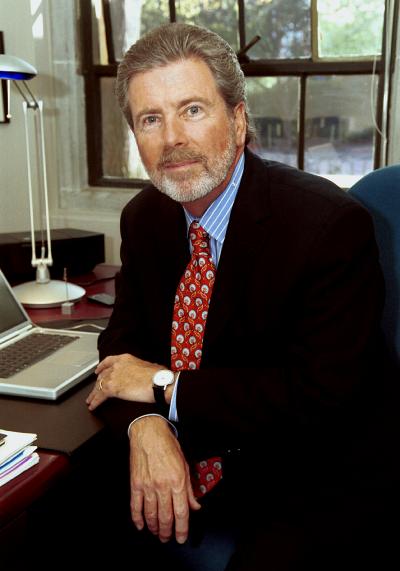
According to its new chair, this year鈥檚 Faculty Senate has a clear agenda that it shares with the administration.
鈥淭he common agenda is very neatly spelled out for us in the accreditation report we received from the Northwest Association of Colleges and Universities last spring,鈥� said Douglas Wadden. 鈥淭heir recommendations cite six areas of concern, all of which are issues that the Faculty Senate has consistently brought up in the couple of years that I鈥檝e been involved as vice chair and now chair.鈥�
Those six areas include:
- Relationships among the University鈥檚 three campuses
- Academic assessment
- Management of scarce resources
- Competitive compensation
- Computer network security
- Faculty and student diversity
The financial considerations 鈥� management of scarce resources and competitive compensation 鈥� will likely take center stage, just as they did last year when the Senate鈥檚 major preoccupation was securing the 2 percent raise that was granted to faculty and professional staff. This year, Wadden said, the Senate needs to consider the bigger financial picture, which includes revenue, enrollment and planning.
鈥淲hat it says in the report is that there seems to be a gradual erosion from continuous, across-the-board cuts,鈥� he noted. 鈥淭he University needs to make the tough decisions necessary to protect the the quality of the educational mission.鈥�
The Senate, he said, will be working to refine a policy it created, called the Reorganization, consolidation and elimination of programs (RCEP), and will urge the administration to employ it as a tool in evaluating programs. RCEP was used last year for the first time when biology, zoology and botany joined to form the new Department of Biology. A review of the College of Forest Resources that is likely to result in a reorganization is ongoing.
鈥淪omething like this needs to exist, and we need to also consider change that鈥檚 academically driven and ground up, as opposed to financially driven and top down,鈥� Wadden said. 鈥淲e鈥檙e drafting revisions to RCEP now which I think will make it more flexible.鈥�
As to the compensation issue, Wadden said the problem varies widely among University departments. 鈥淚 don鈥檛 think there鈥檚 ever been a greater difference between the haves and the have nots,鈥� he said. 鈥淚t鈥檚 not even subtle anymore; it鈥檚 overt.鈥�
Beyond low overall salaries in 鈥渉ave-not鈥� departments, Wadden pointed to salary inversion 鈥� a situation in which new assistant professors with less experience are brought in at salaries higher than associate professors who have just achieved tenure. He said he agrees with the accreditation report which urges the University to 鈥減ersist in its current plans to set a modest minimum goal for compensation increases to be achieved even in the face of revenue shortfalls that require budget cuts.鈥�
Wadden said the Senate will pursue its agenda in part through non-legislative means. One thing he is promoting is to have both the administration and faculty jointly appointed to committees convened to consider policy and address problems. In the past, he said, each group has often had its own committee and tried to share recommendations after the fact, a process that wasn鈥檛 very effective.
鈥淲e need to be more efficient and responsive,鈥� he said.
Wadden also wants to introduce policy discussions in the Senate that are not tied to legislation, especially on broad issues such as the relationship of the three campuses and academic assessment. These are areas, he points out, on which the University has been directed to produce an interim report to the accreditation committee, due in the spring of 2005.
The accreditation report states that there is 鈥渘o apparent reconciliation of the clear diversity of the three campus missions and the concept of 鈥榦ne university鈥� 鈥� that was set out in the University鈥檚 self-study. Concerning assessment, the report says the 91探花鈥渞emains far from the goal of setting learning objectives for all students and measuring progress toward those objectives . . . .鈥�
Wadden believes these and other matters need airing in the Faculty Senate. 鈥淚 think we can bring in people to explore these areas in well defined presentations, rather than wait for that to happen when it鈥檚 a legislative issue,鈥� he said.
Beyond the accreditation report, Wadden is also interested in having the Senate work more actively with Intercollegiate Athletics. The 91探花faculty is less involved with athletics than those at peer institutions, he says.
Wadden a professor of visual communication design who has been at the 91探花for 33 years, has served the senate in several capacities in the past. After two different terms as a senator, he served on a couple of committees before joining the Council on Academic Standards, which he chaired for two years.
鈥淚鈥檝e enjoyed it,鈥� he says of his work with the Senate. 鈥淵ou meet people you鈥檇 like to think you鈥檇 meet in the regular course of business but don鈥檛. I鈥檓 not sure the job is totally doable because the issues are so large and complex. But I do think you can contribute and make a difference. It鈥檚 a wonderful chance to participate in an ongoing process.鈥�